
Delta State University’s 60-credit-hour Master of Education (M.Ed.) in Counseling prepares ethical, knowledgeable and culturally responsive counselors. Students choose Clinical Mental Health Counseling, which prepares graduates to pursue Licensed Professional Counselor (LPC) licensure and work in clinical, community and private practice settings, or School Counseling, which prepares graduates to pursue Mississippi Class AA Educator Licensure and support K–12 students’ academic, career and social-emotional development. Graduates seeking school counselor credentials outside Mississippi should consult their state’s licensing agency for specific requirements.
The program combines synchronous and asynchronous online classes with an on-campus residency for hands-on learning, skill development and collaboration with faculty and peers. This format provides accessible graduate preparation while helping students build the knowledge, skills and professional connections needed for effective counseling practice.
100
Online
60
Credit Hours
LPC
Counseling Licensure Pathway
Why Get an Online Counseling Master’s Degree at DSU?
Our Counselor Education faculty provide a supportive learning environment where students develop the self-awareness, knowledge and clinical skills needed to become ethical, culturally responsive and effective counselors. Experiential learning in our Counseling Lab connects theory with practice, helping students build confidence before applying their skills in clinical and school settings. Faculty bring clinical expertise and real-world perspectives into the classroom.
Students receive support from faculty, staff and peers while building lasting professional relationships within their cohorts and with counselors throughout Mississippi and beyond. The M.Ed. degree in Counseling welcomes applicants from diverse academic and professional backgrounds, with no prerequisite courses required and a bachelor’s degree in any field accepted.
- Online Class attendance
- Applications accepted year-round
- Fall and Spring enrollment
- Online student advisement
- Synchronous and asynchronous coursework
- Full-time and part-time options
- Research opportunities
- Field experience (Internship) requirements
- Chi Sigma Iota Honors Society chapter
- F.E. Woodall Spring Conference for the Helping Professions
- CACREP accredited since 1991
Counseling Specialties
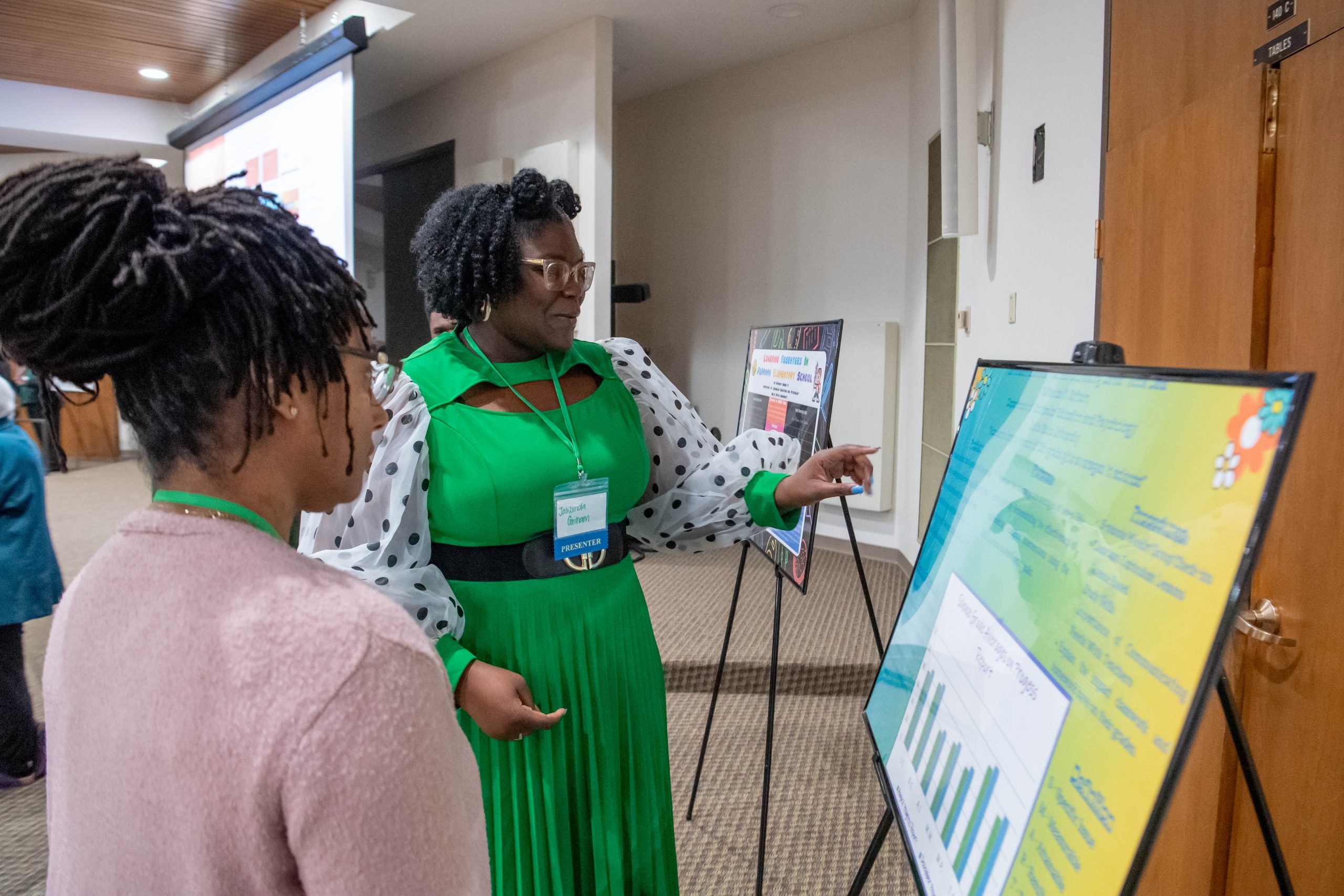
Clinical Mental Health Counseling
Students in the Clinical Mental Health Counseling (CMHC) specialty develop skills to serve children, adolescents and adults in diverse mental health settings. Coursework covers counseling foundations, assessment and diagnosis, treatment planning and evidence-based approaches. Required practicum and internship placements provide supervised clinical experience with faculty guidance.
Graduates are prepared to begin the licensure process, including taking the National Counselor Examination and applying to the Mississippi licensing board for the appropriate provisional credential. The Counseling Compact offers eligible, independently licensed counselors a pathway to practice in other participating states as those states become operational. Students planning to practice outside Mississippi should consult that state’s licensing board. Completing a CACREP-accredited program may support educational eligibility, but each state sets its own requirements.
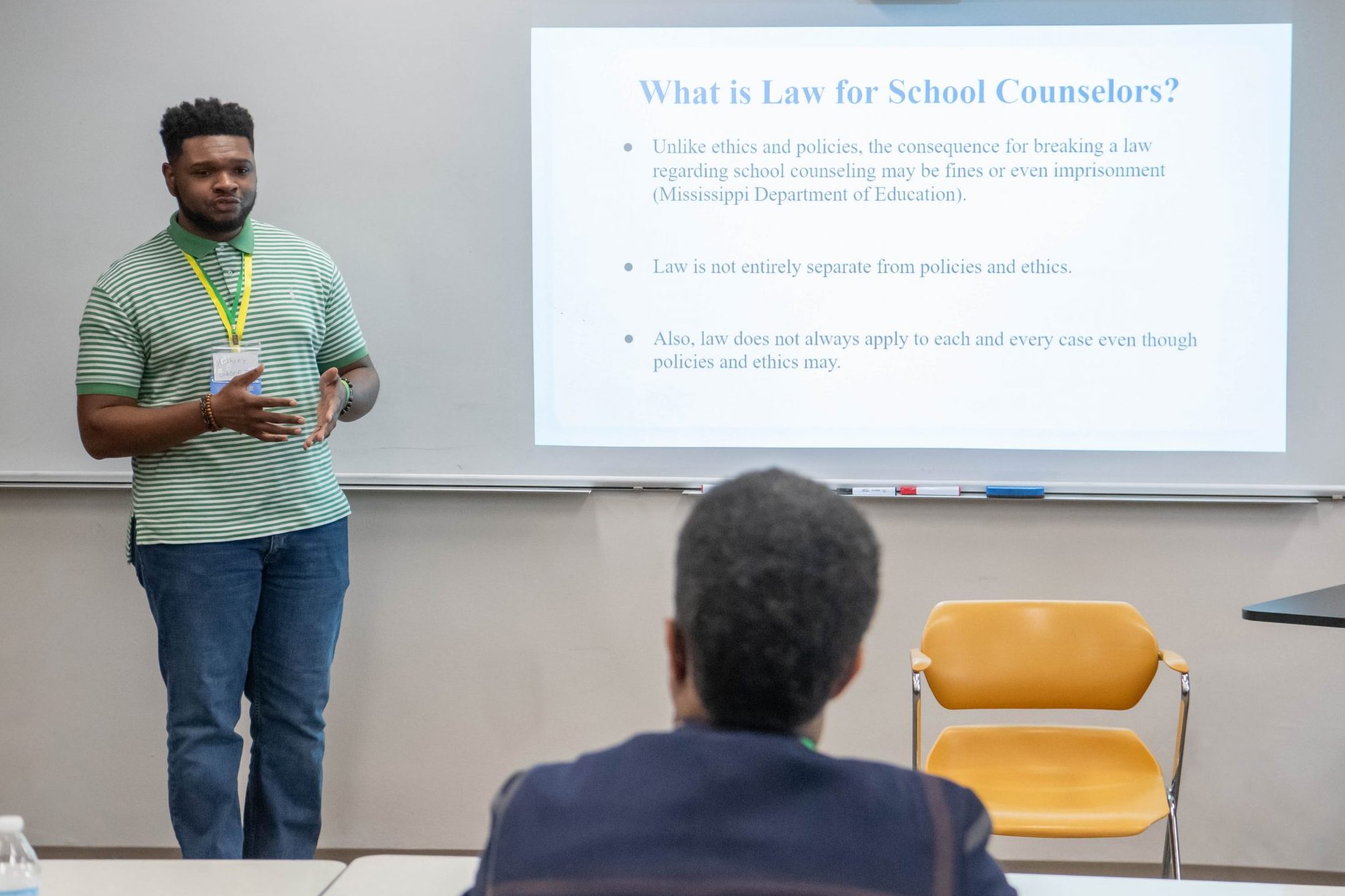
School Counseling
Students in the School Counseling specialization prepare to support K–12 students’ academic, career and social-emotional development. Coursework emphasizes school counseling, consultation, collaboration, advocacy and data-informed practice, with a focus on culturally responsive services. Faculty provide mentorship as students complete supervised practicum and internship experiences in approved school settings, applying their skills in educational environments.
The program is designed to meet academic requirements for Mississippi Class AA Educator Licensure in School Counseling. Graduates may also pursue opportunities in higher education and student support settings or additional counseling credentials, subject to state regulations and board requirements. Students planning to work outside Mississippi should consult the appropriate state licensing agency about eligibility and any additional coursework, examinations or experience required.
What Can I Do With a Master’s Degree in Counseling?
Professional counselors help people gain personal insights, develop strategies, and come up with real solutions to the problems and challenges from every area of life. As trained and credentialed professionals, counselors accomplish this by getting to know clients, by building safe, positive relationships and suggesting tools and techniques they believe will benefit clients.
At Delta State, we train students as a counselor first, regardless of the specialty they choose. We have counseling alumni in school districts all over the state of Mississippi, and in other institutions such as: University of Mississippi Medical Center, Bolivar Medical Center, Oxford Treatment Center (Drug Addiction), and private counseling practices.
- School counselor
- Mental health counselor
- Mental health therapist
- Director of mental health facility
- Director of school counseling program
- Private practice counselor
”Here at Delta State, you will be equipped for success as you deepen your understanding of human behavior, theoretical perspectives, interventions, techniques, and more! The Counselor Education program has provided a meaningful and quality learning experience. This program allows you to explore areas of interest, try new things, advance your skills, and connect with professionals.
Haley Carmen Hillhouse, Class of 2023Oxford Treatment Center, Counselor
Graduate Funding Opportunities
The Counselor Education program offers 3 scholarships for students who are currently in the program. Scholarship eligibility is based on a combination of factors, such as grades, leadership skills, initiative, motivation, and recommendation of the faculty and staff. Graduate students at Delta State University also have a number of funding opportunities available to them, including Graduate Assistantships, fellowships, scholarships, and loans. We also offer an affordable tuition rate with no additional fees for out-of-state students. We work closely with students to identify and apply for federal and state financial aid programs, as well as student loans and state scholarships. We are committed to providing our students with all of the tools necessary to succeed in the education field, including access to affordable education and financial support.
Program Goals
The faculty and staff of the Delta State University Counselor Education Program, through teaching, training, supervision, and experiential activity, develop ethical, competent, and culturally sensitive counselors who are prepared to work in school or community settings. Program faculty seek to strengthen the profession by modeling for students the professional expectation of continued growth and learning, interpersonal awareness, and practical application of sound principles and practices in their work as professional counselors.
Admission Requirements
Application deadlines
- February 15 for Fall admission
- October 1 for Spring admission
Admission to the Counselor Education Program is selective and based on a holistic review of each applicant’s completed application. Meeting the minimum requirements does not guarantee admission. Consistent with CACREP Standard 1.J, faculty consider each applicant’s career goals, aptitude for graduate-level study in an online learning environment, and potential to form effective counseling relationships with diverse populations. Applicants should demonstrate promise for success in the program and for developing into ethical, culturally responsive professional counselors.
All application materials should be submitted to the Office of Graduate Studies as directed through the graduate application process. Questions regarding application materials may be sent to grad-info@deltastate.edu. Applications are reviewed throughout the admission cycle as materials are received, and applicants are encouraged to submit all required documents as early as possible for timely consideration.
Application Requirements
- Graduate application
Complete the online graduate application. - Academic qualifications
Applicants must have a minimum cumulative undergraduate GPA of 2.75 or a minimum GPA of 3.0 across the final 60 hours of undergraduate coursework. - Professional essay
Submit a typed essay describing your reasons for pursuing a career in counseling and reflecting on the personal and professional qualities that support effective counseling practice. Your essay should address your ability to relate to others with care and authenticity, engage respectfully with people from diverse backgrounds, demonstrate integrity and ethical conduct, and commit to continued personal and professional growth.
Organize your essay into five sections using the following prompts:
-
- My rationale for pursuing a career in counseling is best expressed as follows…
- My ability to work effectively with others in a caring and authentic manner is demonstrated by…
- My awareness of cultural differences and commitment to approaching others without judgment are demonstrated by…
- My commitment to integrity and ethical conduct is demonstrated by…
- My commitment to continued personal and professional development is demonstrated by…
Applicants should provide clear, thoughtful, and comprehensive responses to each prompt.
- Professional résumé or curriculum vitae
Submit a current professional résumé or CV that includes your educational background, employment history, relevant volunteer or service experience, professional involvement, and other experiences related to your preparation for graduate study in counseling. - Professional references
Provide contact information for three professional references. For each reference, include the individual’s name, professional title and place of employment, relationship to you, email address, and telephone number. - Faculty interview
Qualified applicants may be invited to participate in a group interview with Counselor Education faculty. The interview provides an additional opportunity for applicants to demonstrate their career goals, readiness for graduate study, interpersonal abilities, professional dispositions, and potential to work effectively with diverse populations. - English-language proficiency
Applicants whose first language is not English must earn a minimum TOEFL score of 90.
Curriculum
The following courses are required to complete the Master of Education in Counseling.
Clinical Mental Health Counseling (Specialty)
| Course Number | Course Title | Credits |
| CED 600 | Introduction to Counseling and Professional Ethics | 3 |
| CED 601 | Counseling Theory | 3 |
| CED 602 | Assessment Techniques in Counseling | 3 |
| CED 604 | Pre-Practicum and Introduction to Telemental Health Counseling | 3 |
| CED 605 | Group Counseling | 3 |
| CED 606 | Career Development and Placement | 3 |
| CED 609 | Counseling Practicum | 3 |
| CED 610 | Clinical Mental Health Counseling Internship | 6 |
| CED 616 | Social and Cultural Foundations | 3 |
| CED 620 | Human Growth and Development | 3 |
| CED 627 | Foundations of Clinical Mental Health Counseling | 3 |
| CED 630 | Counseling Skills | 3 |
| CED 635 | Methods of Counseling Research and Statistics | 3 |
| CED 703 | Psychodiagnostics in Counseling | 3 |
| CED 711 | Crisis Intervention Techniques | 3 |
| CED 712 | Counseling Children and Adolescents | 3 |
| CED 715 | Marriage and Family Counseling | 3 |
| Approved Electives | 6 | |
| TOTAL | 60 | |
School Counseling (Specialty)
| Course Number | Course Title | Credits |
| CED 600 | Introduction to Counseling and Professional Ethics | 3 |
| CED 601 | Counseling Theory | 3 |
| CED 602 | Assessment Techniques in Counseling | 3 |
| CED 604 | Pre-Practicum and Introduction to Telemental Health Counseling | 3 |
| CED 605 | Group Counseling | 3 |
| CED 606 | Career Development and Placement | 3 |
| CED 609 | Counseling Practicum | 3 |
| CED 616 | Social and Cultural Foundations | 3 |
| CED 617 | Foundations in School Counseling | 3 |
| CED 619 | School Counseling Internship | 6 |
| CED 620 | Human Growth and Development | 3 |
| CED 630 | Counseling Skills | 3 |
| CED 635 | Methods of Counseling Research and Statistics | 3 |
| CED 707 | Consultation and Counseling of Diverse Populations | 3 |
| CED 711 | Crisis Intervention Techniques | 3 |
| CED 712 | Counseling Children and Adolescents | 3 |
| CED 715 | Marriage and Family Counseling | 3 |
| Approved Electives | 6 | |
| TOTAL | 60 | |
Licensure Requirements
The Master of Education in Counseling curriculum meets Mississippi’s educational requirements for provisional licensure in professional counseling and prepares graduates to pursue applicable licensure and certification examinations. Students seeking licensure in Mississippi should consult the Mississippi State Board of Examiners for Licensed Professional Counselors for current requirements, application procedures, and credentialing information.
Mississippi is a member of the Counseling Compact, which is designed to increase professional mobility by allowing eligible, independently licensed counselors to apply for the privilege to practice in other participating states as those states become operational. The Compact does not replace initial state licensure, and participation is subject to individual eligibility requirements and state implementation timelines.
Professional counseling licensure requirements vary by state. Students who currently reside outside Mississippi or plan to practice in another state should review that state’s requirements before enrolling and throughout the program. In accordance with U.S. Department of Education regulations, additional information is available on Delta State University’s Professional Licensure Disclosure page.
Degree Requirements
A candidate for the Master of Education in Counseling is required to meet the following:
- 3.0 overall GPA
- Completed program of study (minimum of 60 course hours)
- Completion of Capstone Paper
- Completion of Professional Presentation
- Completion of minimum hours of field experience (700)
- Passed the Counselor Preparation Comprehensive Examination (CPCE)
For more information on degree requirements and specifics on courses needed to complete the degree, consult the Graduate Academic Catalog.
Fees
Tuition at Delta State University covers the cost of classes.
Some Counselor Education courses have lab fees. Online courses are assessed a $5.00 per credit hour distance learning course fee.
Review the graduate academic catalog for other course related fees.
Counseling Resources
Current Students
Stay connected with important dates, explore academic and professional opportunities, and engage with program resources.
Program Coordinator
Dr. Mary Bess Pannel
Assistant Professor of Counselor Education
P: mpannel@deltastate.edu
T: (662) 846-4392